De
De
 En
En
Select package:


Organic Linseed Oil and its use in the food industry
Often referred to as “liquid gold”, Organic Linseed Oil (flaxseed oil) is valued in the food industry for its ability to refine a variety of recipes. Its naturally nutty flavor complements salads, dips, quark dishes, and desserts, and it can also be added to soups for additional taste.
Organic Linseed Oil contains a high proportion of alpha‑linolenic acid (an Omega‑3 fatty acid), typically above 50%. This composition contributes to its low smoke point; the oil is not suited for frying or deep‑frying.
Organic linseed (flaxseed) oil is also used in cosmetics for its high content of alpha-linolenic acid and fatty acids, which give it emollient and moisturizing effects.
Confusion with organic linseed oil
Organic linseed oil is often confused with organic camelina oil. Botanically, however, they are not related. Flax (flaxseeds or linseeds) belongs to the Linaceae family, while camelina is part of the Brassicaceae family. Their flavors also differ.
Interesting facts
Flax has been cultivated for centuries and has played many practical roles throughout history. In the Middle Ages, linseed oil was applied to armor to protect the metal, and it was also used as a treatment for timber‑framed houses to help preserve the wood. At the same time, the plant’s tall stalks were processed into linen, a widely used fabric in everyday clothing.
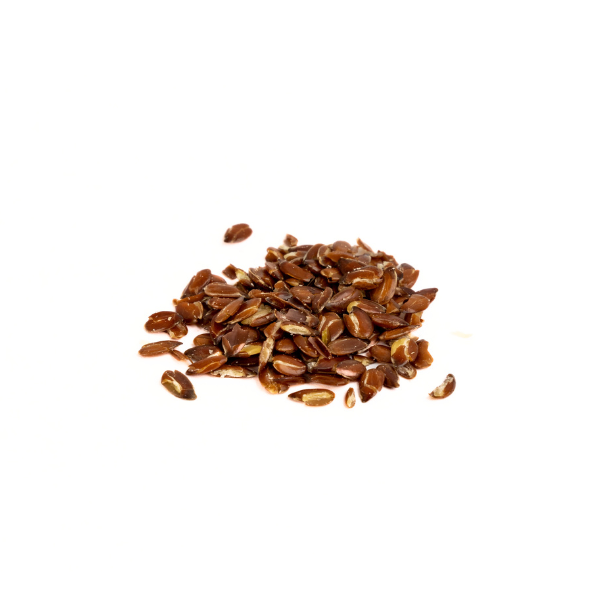
The flax plant grows approximately 0.5–1 m tall and produces white to blue flowers. Flax seeds are small, found inside rounded fruit capsules, and can be either yellow‑gold or brown depending on the variety.
Flax seeds contain around 40% oil, which can be extracted through gentle mechanical pressing, followed by settling and fine filtration.
COMMERCIAL DISCLAIMER
The information provided is for informational and illustrative purposes only. We offer a wide range of products, available in stock or upon request, depending on availability and quantity.
*Conventional products are available on request.
Product availability, specifications, and prices are subject to change and must be confirmed. For more information, please contact the SanaBio GmbH team directly.